

Dental splints for snoring and sleep-disordered breathing
Custom dental splints are an effective treatment option for many people with sleep-disordered breathing. Our sleep screening pathway involves a consultation and a simple at-home sleep test, to check if a sleep splint is right for you.

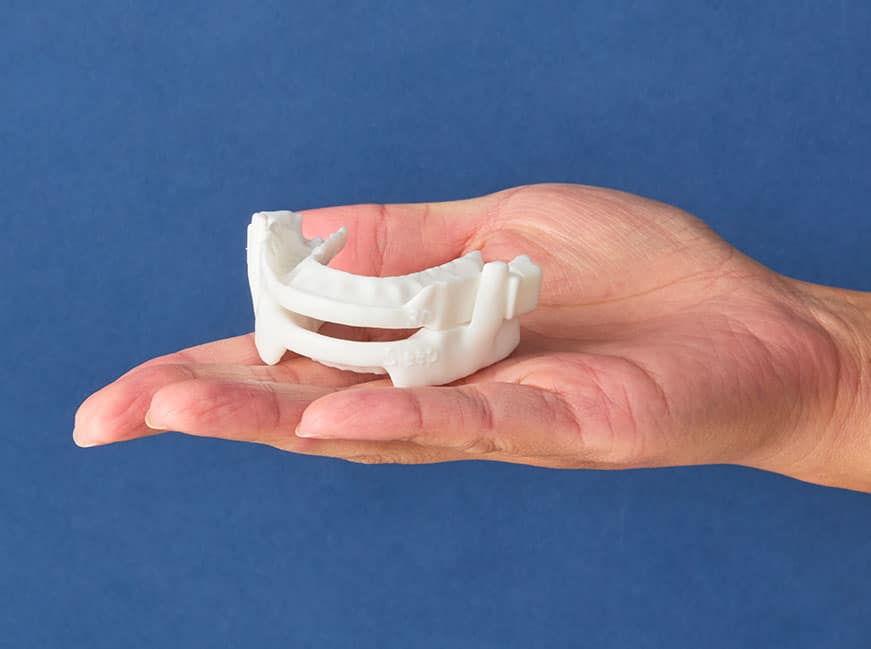
More than a dental splint: A comprehensive approach to jaw issues
Before prescribing any type of dental splint, we seek to understand all the factors influencing your jaw function and sleep.
We begin with a comprehensive assessment covering:
- Snoring and breathing symptoms
- Sleep quality and daytime fatigue
- Bite and jaw position
- Airway-related anatomy
- TMJ dysfunction
This comprehensive assessment allows us to recommend the most appropriate treatment pathway for your presentation.
TMJ splints and Mandibular Advancement splints are not the same
For those with snoring and mild sleep-disordered breathing, our clinicians can prescribe and fit a mandibular advancement splint. This is an adjustable sleep splint that gently repositions your mandible (lower jaw) by moving it forwards during sleep. When the soft tissues are moved forwards, away from the throat, there is a wider space for air flow – so you can breathe easier!
Two dental splints may look very similar but work very differently, depending on which issue they’ve been prescribed for.
| Splint type | TMJ splint | Sleep splint Mandibular advancement splint / snoring mouthguard |
|---|---|---|
| For | Patients with temporomandibular joint disorder (TMD) | Patients with sleep-disordered breathing |
| Purpose |
Designed to:
|
Designed to:
|
| Book an assessment if you have... |
TMJ-related symptoms:
|
Sleep-related symptoms:
|
| Care may include |
|
|
Some patients experience symptoms across both conditions, making a comprehensive assessment particularly valuable.
A multidisciplinary approach to jaw and sleep health
Many clinicians look at either jaw issues or sleep, but we assess both. TMJ Clinics considers the relationship between:
- Jaw function
- Bite mechanics
- Muscle activity
- Airway anatomy
- Breathing patterns
- Sleep quality
Our TMJ-accredited dentists and physiotherapists work together to provide an integrated treatment pathway.

We are not a sleep lab
TMJ Clinics does not replace specialist sleep physicians. Instead, we provide an accessible first step for people whose airway and jaw may be contributing to snoring or poor sleep.
If your assessment identifies moderate or severe sleep-disordered breathing, we can refer you to a sleep physician for further investigation and management.
This ensures you receive the right level of care for your individual needs.
If you have mild sleep-related breathing concerns, we may recommend a custom mandibular advancement splint to help support your airway during sleep.
Free Patient Guide
If you are wondering how your jaw alignment affects your breathing, or whether a TMJ splint is right for you, our clinical team has compiled an accessible, comprehensive resource.
Read our guide to snoring, sleep-disordered breathing & dental sleep splints.

Sleep screening is part of every TMJ consultation
Your brain needs a reliable supply of oxygen 24/7, whether you’re awake or asleep. Sleep-disordered breathing can increase the risk of many serious health conditions and can affect your concentration and mood.
For these reasons, sleep symptom screening is a standard part of every consultation at TMJ Clinics.
Our locations
TMJ Clinics can be found in major cities across Australia, including Adelaide, Brisbane, Gold Coast, Canberra, Melbourne, West Melbourne, Bankstown, Kogarah, North Sydney, Norwest and Newcastle.
Why choose TMJ Clinics?
Dentists dedicated solely to treating sleep and jaw issues.
Comprehensive assessment of jaw, airway and sleep symptoms

Custom-made dental splints designed for your diagnosis

Sleep symptom screening integrated into standard consultations
Convenient at-home Level 3 sleep testing where clinically appropriate

Multidisciplinary care under one roof

Clear referral pathways to sleep physicians when needed
FAQs
What is a TMJ splint?
A TMJ splint is a custom dental appliance worn over the teeth to help manage jaw-related symptoms like pain, clenching and grinding. At TMJ Clinics, it’s used as part of a broader treatment plan delivered by a multidisciplinary team.
What is a mandibular advancement splint?
What's the difference between a TMJ splint and a sleep splint?
Can a dental splint help with snoring?
Yes, for many patients a mandibular advancement splint reduces snoring by widening the airway. Suitability depends on an assessment of your jaw, airway and overall symptoms.
Do I need a sleep study before getting a splint?
If your symptom screening suggests a sleep-disordered breathing issue, we will recommend a simple at-home sleep test. This provides objective data about your airway during sleep and guides decisions about whether a sleep splint is appropriate.
Is TMJ Clinics a sleep lab?
No. We’re a dental-led clinic. We screen for sleep-disordered breathing symptoms and offer oral splint therapy where appropriate, and we refer patients to a sleep physician for further testing or management when needed.
Do you provide CPAP?
No. CPAP is generally used for moderate to severe sleep-disordered breathing and is provided in consultation with a sleep physician. We can refer you on if this is the right path for you.
How long does it take for a splint to work?
Timeframes vary. Some people notice change within weeks, while others need several months.
When should I contact TMJ Clinics?
Consider booking if you have persistent jaw pain, locking or limited movement, frequent headaches or ear symptoms, snoring or unrefreshing sleep, or if self-care hasn’t helped.