Think your jaw pain might be TMJ?

Find out in under 2 minutes
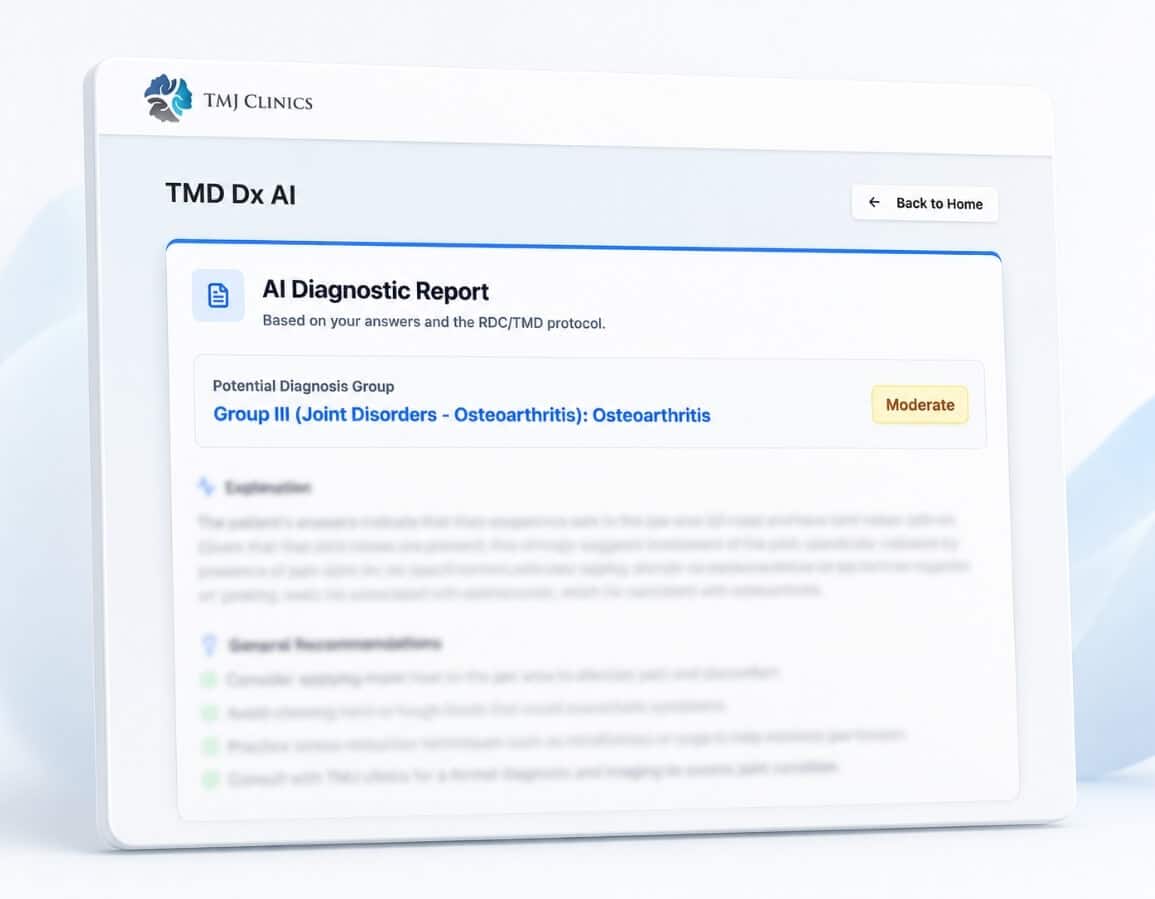
Jaw pain. Clicking. Headaches. Teeth grinding. Earache. Often, these matters are addressed in isolation, but what if they’re all connected? By the time you hear about TMJ disorder, you may have seen multiple clinicians and are piecing things together yourself, trying to work out what you’re dealing with and what help you may need. Our 2-minute TMJ assessment is designed to help you identify common symptoms linked with TMJ-related problems.
TMJ Clinic AI Diagnostic Report

Receive a TMJ Consult Toolkit

Navigating jaw pain can be overwhelming, and it’s common to feel unsure about where to start or how to explain your symptoms to our TMJ team. Whether you’re just starting to notice clicking and tension or you’ve been managing discomfort for years, preparation is the key to getting it right. Sign up to receive our TMJ consult toolkit for resources designed to help you advocate for you health, including:

  • Checklists and resources to help you monitor
  • Essential questions to ask your dentist
  • At-Home tips for managing tension while you consider next steps

Not Ready to Book? Get Our 'Consult Guide' Instead

* indicates required

What is TMJ?

The temporomandibular joints on either side of your face connect your lower jaw to your skull and help with everyday movements like talking, chewing, yawning, and swallowing. When the joint, muscles, or surrounding structures become irritated or overworked, they can trigger a range of symptoms affecting the jaw, face, head, and neck. These symptoms can often overlap with other health conditions. A proper clinical assessment is required, either to rule out other issues or to make a timely diagnosis of TMJ disorder.
A holistic approach to TMJ pain management

Common signs of TMJ-related problems

There are many symptoms of TMJ disorder and the experience will vary from one person to another.

Woman holding her jaw in discomfort, showing signs of possible TMJ disorder or jaw pain.
For example, some people feel jaw discomfort only occasionally, while others notice it on most days. TMJ disorder may cause symptoms such as: 

  • jaw pain or tenderness
  • jaw stiffness, especially in the morning
  • clicking, popping, or grating sounds in the jaw
  • difficulty opening wide or chewing comfortably
  • teeth grinding or clenching
  • facial tension or tightness
  • headaches linked with jaw or facial muscle tension
  • neck tension or upper shoulder tightness
  • a feeling that your bite has changed
  • episodes where the jaw feels stuck or harder to move.

Having one or more of these symptoms does not automatically mean you have TMJ disorder, but it does suggest it would be worth discussing the possibility with a qualified healthcare professional.

Why TMJ symptoms are often missed

If TMJ disorder always triggered jaw pain, doctors and dentists would immediately examine the jaw and the condition would probably be identified more easily. But TMJ disorder may first present as:
recurring headaches

Recurring headaches

aching around the ears

Aching around the ears

tightness through the face

Tightness through the face

neck discomfort

Neck discomfort

worn teeth from grinding

Teeth grinding

tension when eating or speaking

Jaw clicking or popping

A structured symptom checklist may provide a clearer picture of what you are experiencing so you can communicate it more accurately during an appointment.

Take the 2-minute TMJ assessment

Our assessment is designed to help you reflect on your experience of symptoms commonly associated with TMJ disorders.

It asks you fewer than 10 questions about symptoms such as headaches and jaw pain over the last 30 days then provides some initial insights and recommendations to ease pain at home.