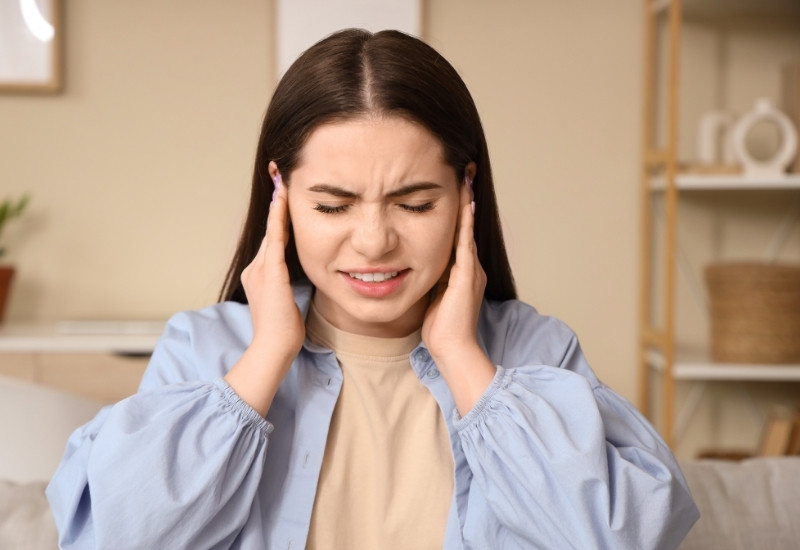
Ongoing ear pain can be frustrating, especially when it persists after causes like infection and hearing loss have been ruled out. Sometimes, strange as it seems, the problem is not your ear but your jaw.
Ear pain and TMJ
TMJ disorder refers to dysfunction in the joints that connect your jaw to your skull. These joints are essential for everyday movements like speaking and chewing.
Common TMJ symptoms include:
- Jaw stiffness or pain
- Clicking or popping sounds when moving the jaw
- Facial tension or muscle fatigue
- Headaches or neck pain
- Ear discomfort or pressure near the jaw.
The relationship between TMJ and your ears
The TMJ is located directly next to the ear canal and shares nerves and muscle structures with parts of the ear.
This proximity means that TMJ dysfunction can lead to referred pain or pressure to the ear, even when there’s no ear infection or inflammation.
TMJ and ear pain
Ear pain caused by TMJ disorder may feel like:
- A dull or sharp ache in or around the ear
- Pain that worsens with jaw movement (e.g. talking, chewing, yawning)
- A feeling of fullness, pressure or congestion in the ear
- Discomfort that radiates toward the temple, jaw or neck
- A blocked or clogged ear sensation
- Intermittent changes in hearing
- Tinnitus (ear ringing), a complex issue with many contributing factors to consider.
If your ear pain traces back to TMJ disorder, then treatment needs to focus on the underlying issue – your jaw joint.
Treatment options
TMJ disorder often involves a complicated journey to diagnosis. If you present with unexplained ear pain, you’ll often be referred to an ear, nose and throat specialist. You may also have seen a number of other doctors or allied health professionals before someone suggests TMJ disorder.
TMJ Clinics brings together a multidisciplinary team of healthcare professionals with expertise in managing TMJ disorder. Our team of doctors, physiotherapists and dentists work with you using tailored, evidence-based treatments to help reduce jaw strain, improve function, and manage any referred symptoms such as ear pain.
Treatment may include:
- Physiotherapy to reduce tension in the jaw and surrounding muscles
- Splint therapy to reduce pressure from clenching or grinding
- Dry needling to address muscle pain
- Medication to help manage inflammation or nerve pain
- Prescription-only procedures, which our clinicians may consider following an appropriate jaw assessment consultation.
When to seek TMJ care
If you’re experiencing ongoing ear pain with no clear ear-related cause, it may be time to explore whether your jaw is contributing to the problem.
You can find us in many Australian cities, including Adelaide, Brisbane, the Gold Coast, Canberra, Melbourne, Bankstown, Kogarah, North Sydney, Norwest and Newcastle.
If you need our help, please book an appointment today.
Disclaimer
All information is general and not intended as a substitute for professional advice. Any surgical or invasive procedure carries risks.
References
- Healthdirect, Temporomandibular joint dysfunction, https://www.healthdirect.gov.au/temporomandibular-joint-dysfunction, [Accessed 2 December 2025]
- Healthline, 8 causes of ear and jaw pain, https://www.healthline.com/health/pain-relief/ear-and-jaw-pain, [Accessed 2 December 2025]