

Better sleep starts with understanding your jaw and airway
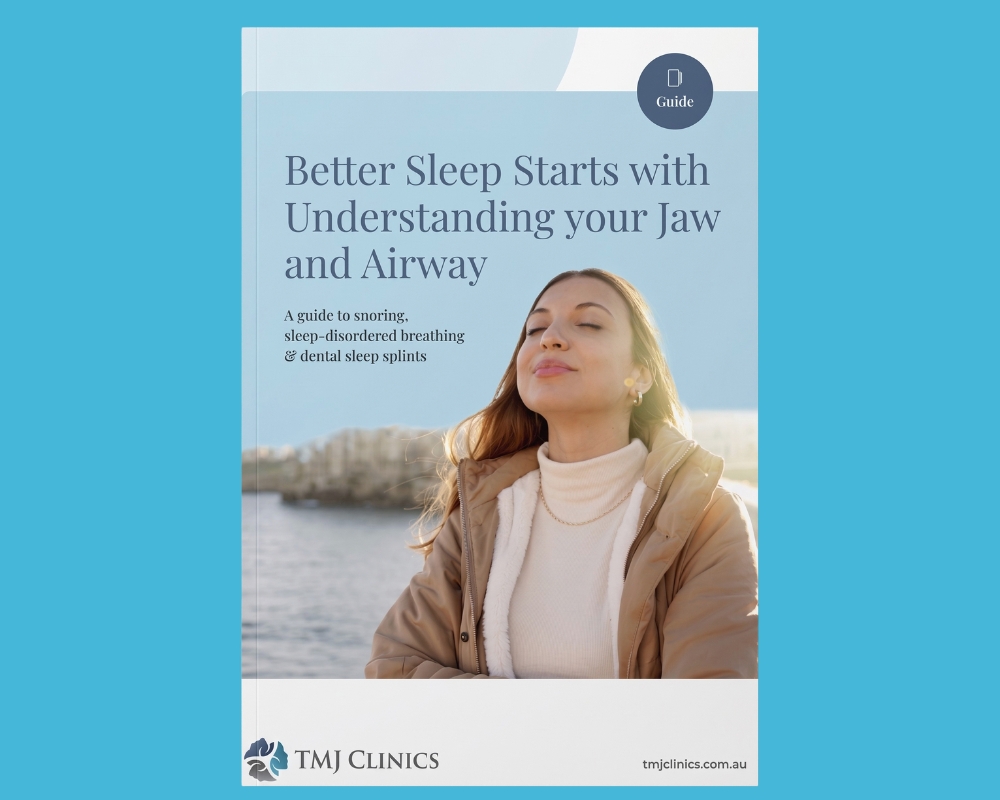
Download our free guide to snoring, sleep-disordered breathing and dental sleep splints
You can spend eight hours in bed and still wake up exhausted. Persistent poor sleep has significant consequences for your health and wellbeing and shouldn’t be ignored. Snoring, morning headaches, waking with a dry mouth and struggling to concentrate during the day can all be signs that your sleep is being repeatedly disturbed, even if you’re not aware of waking up. For some people, the position of the jaw and tongue influences the space available for breathing during sleep. Our free guide explains the connection and outlines what you can do if poor sleep is affecting your days.

What happens to your breathing while you sleep?
When you fall asleep, muscle tone drops throughout your body, including in your tongue and throat. Most people continue breathing without a problem. But that drop in muscle tone may make breathing during sleep more difficult if your upper airway is already relatively narrow, or if the position of your jaw and tongue leaves less room for airflow.
The result can range from snoring to obstructive sleep apnoea (OSA). The guide explains what happens when your breathing is repeatedly interrupted during and why you may have no memory of these disturbances the next morning.
Could poor sleep be affecting your day?
You may want to look more closely at your sleep if you regularly:
- Snore
- Briefly stop breathing during sleep
- Wake up gasping
- Go to the toilet more often overnight
- Have morning headaches
- Have a dry mouth or sore throat on waking
- Experience excessive daytime sleepiness or fatigue
- Find it hard to concentrate during the day.
These symptoms can have many causes and do not necessarily mean you have sleep apnoea. They are, however, worth discussing with a health professional when they become persistent.

Where does your jaw fit into the picture?
TMJ Clinics is known for assessing jaw pain, clicking, locking and teeth grinding. We are also interested in what happens when you sleep.
The size and position of the lower jaw, tongue and surrounding soft tissues can influence the dimensions of the upper airway. If your lower jaw sits further back, there may be less room behind the tongue, which may narrow your airway.
That’s why TMJ Clinics offers sleep and snoring assessments to examine this relationship between the jaw, airway, and sleep.

What you’ll learn in the guide
The guide explains:
- The difference between poor sleep, snoring and obstructive sleep apnoea
- What happens to your airway when you fall asleep
- How mild, moderate and severe OSA are measured
- How jaw position and tongue space can influence the airway
- What happens during a TMJ Clinics sleep and snoring assessment
- When an at-home sleep study may be recommended
- How a dental sleep splint works
- The difference between a sleep splint and a TMJ splint
- When a sleep splint may be considered instead of CPAP
Disclaimer All information is general and not intended as a substitute for professional advice. Any surgical or invasive procedure carries risks.