

Sleep & Snoring Assessments

Could this be you?
- Loud snoring
- Pauses in breathing or waking up gasping
- Needing to urinate frequently overnight.
Day-time symptoms:
- Excessive sleepiness or fatigue
- Waking up with a headache, dry mouth, or sore throat
- Trouble concentrating
- High blood pressure.
Anyone can book a sleep and snoring assessment. You don’t need to be an existing patient at TMJ Clinics, but if you’re already managing jaw symptoms with us, a sleep assessment can sit alongside your existing care.
What we offer
We’re not a sleep lab, and we don’t replace specialist sleep physicians. Instead, we offer an accessible and convenient way to promptly assess sleep concerns and identify next steps.
Consultation
- A 1-hour appointment with a dentist at TMJ Clinics
- Discussion of your sleep symptoms
- Questionnaire
- Physical examination of your jaw and airway-related anatomy.
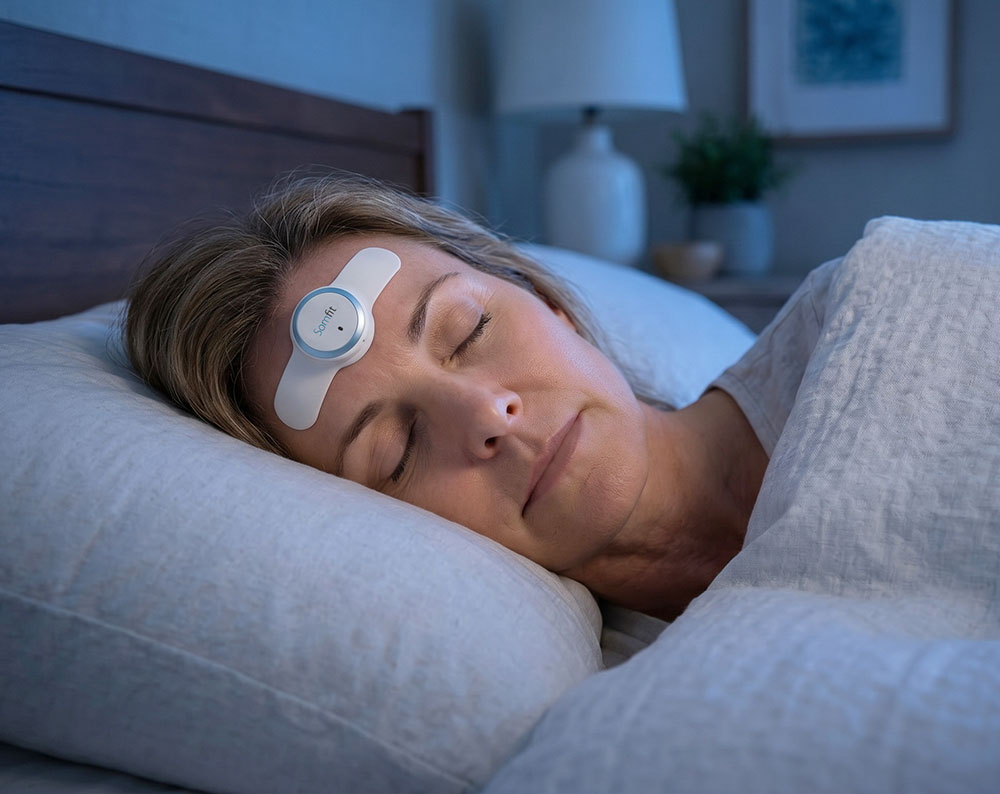
Level 3 At-home sleep testing (if appropriate)
Lightweight wireless monitor worn overnight on the forehead
- Tracks breathing patterns
- Monitors blood oxygen levels and pulse rate
- Records snoring and head position
- Measures wake-ups via brain wave monitoring (EEG).
Conducted in the comfort of your own bed
- Avoids an overnight stay in a sleep lab (and the associated costs of hospital admittance).
Guided next steps
- Explanation of your results
- For snoring and mild sleep apnoea, an oral sleep splint (Mandibular advancement splint) is often appropriate
- Our physiotherapists can also assist with managing your sleep-disordered breathing
- If screening indicates moderate to severe sleep apnoea, referral to a sleep physician can be arranged for further investigation and management.
What happens during disordered sleep?
Sleep is vital. It’s when your brain consolidates memories, clears waste products and resets for the day ahead. It’s also when your body repairs tissue, regulates hormones and supports your immune system.
Your brain depends on a steady oxygen supply, even while you sleep. Obstructive sleep apnoea (OSA) occurs when the muscles and soft tissues at the back of the throat relax and the airway narrows or briefly blocks. Your brain notices the interrupted oxygen supply and briefly rouses you so that you breathe again.
Throat muscles relax
Including those that hold the airway openAirway narrows
Less room for air to move freelyAirflow restricted or blocked
Breathing is partially or fully interruptedBody briefly rouses
Reopens the airway, often without you wakingSleep becomes fragmented
Without enough deep, restorative restRepeat dozens of times a night
Left unaddressed, this pattern can place ongoing strain on the body. Chronically bad sleep increases your risk of weight gain, heart disease, type 2 diabetes, certain cancers and mental health difficulties. It can also make you more irritable and difficult to live with!
That’s exactly why early screening matters.
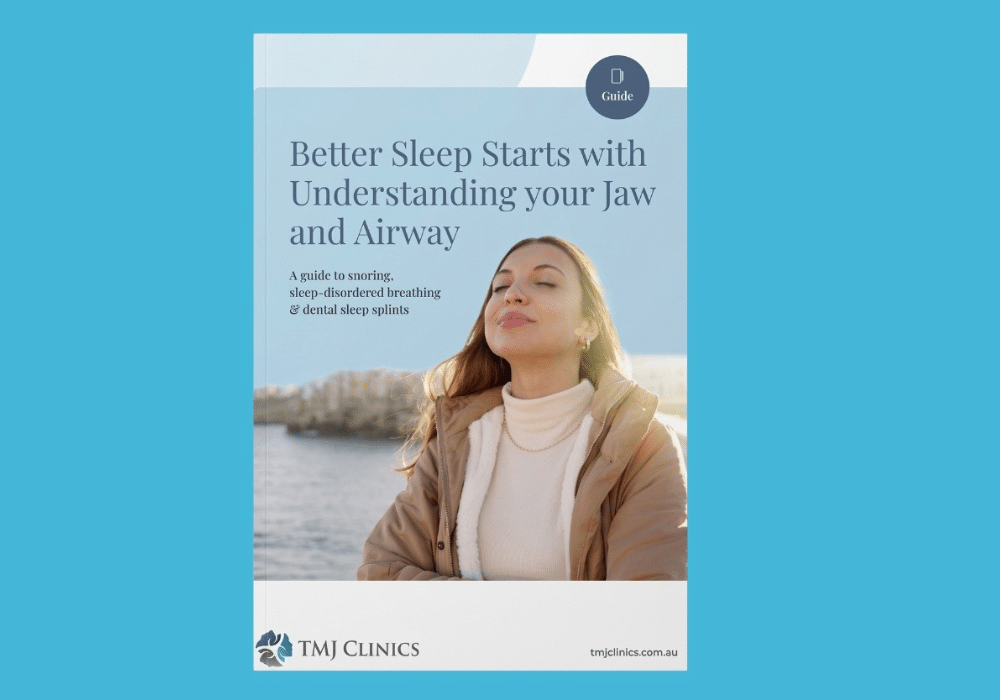
Free Patient Guide
If you are wondering how your jaw alignment affects your breathing, or whether a TMJ splint is right for you, our clinical team has compiled an accessible, comprehensive resource.
Sleep splints vs TMJ splints: what’s the difference?
It’s a common question, and an important one:
- A TMJ splint is designed to ease pressure on the jaw joint.
- A sleep splint is designed to help support an open airway during sleep.
They hold the jaw in different positions because they’re solving different problems.