

Think your jaw pain might be TMJ?
Find out in under 2 minutes
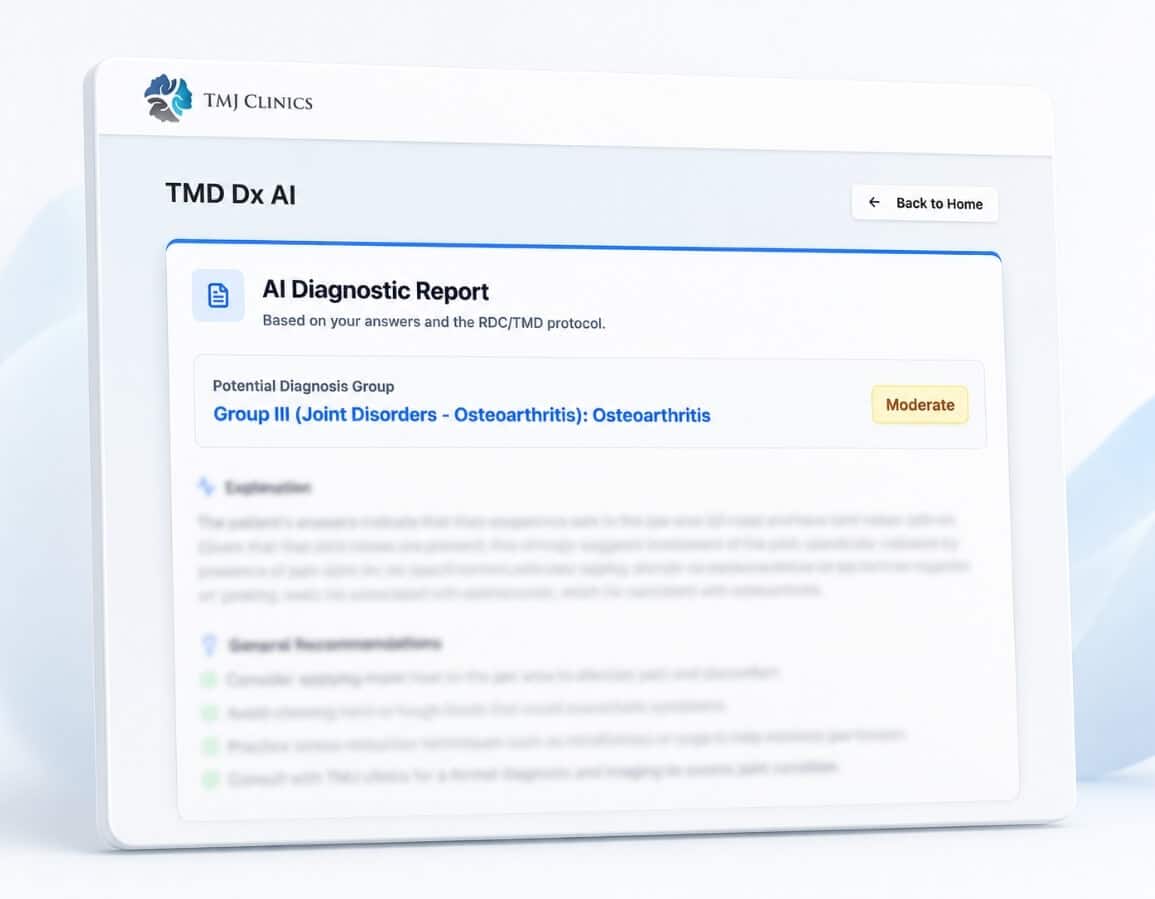
Receive a TMJ Consult Toolkit
- Checklists and resources to help you monitor
- Essential questions to ask your dentist
- At-Home tips for managing tension while you consider next steps
What is TMJ?

Common signs of TMJ-related problems
There are many symptoms of TMJ disorder and the experience will vary from one person to another.

- jaw pain or tenderness
- jaw stiffness, especially in the morning
- clicking, popping, or grating sounds in the jaw
- difficulty opening wide or chewing comfortably
- teeth grinding or clenching
- facial tension or tightness
- headaches linked with jaw or facial muscle tension
- neck tension or upper shoulder tightness
- a feeling that your bite has changed
- episodes where the jaw feels stuck or harder to move.
Having one or more of these symptoms does not automatically mean you have TMJ disorder, but it does suggest it would be worth discussing the possibility with a qualified healthcare professional.
Why TMJ symptoms are often missed
If TMJ disorder always triggered jaw pain, doctors and dentists would immediately examine the jaw and the condition would probably be identified more easily. But TMJ disorder may first present as:
Recurring headaches
Aching around the ears
Tightness through the face
Neck discomfort
Teeth grinding
Jaw clicking or popping
A structured symptom checklist may provide a clearer picture of what you are experiencing so you can communicate it more accurately during an appointment.
Take the 2-minute TMJ assessment
Our assessment is designed to help you reflect on your experience of symptoms commonly associated with TMJ disorders.
It asks you fewer than 10 questions about symptoms such as headaches and jaw pain over the last 30 days then provides some initial insights and recommendations to ease pain at home.